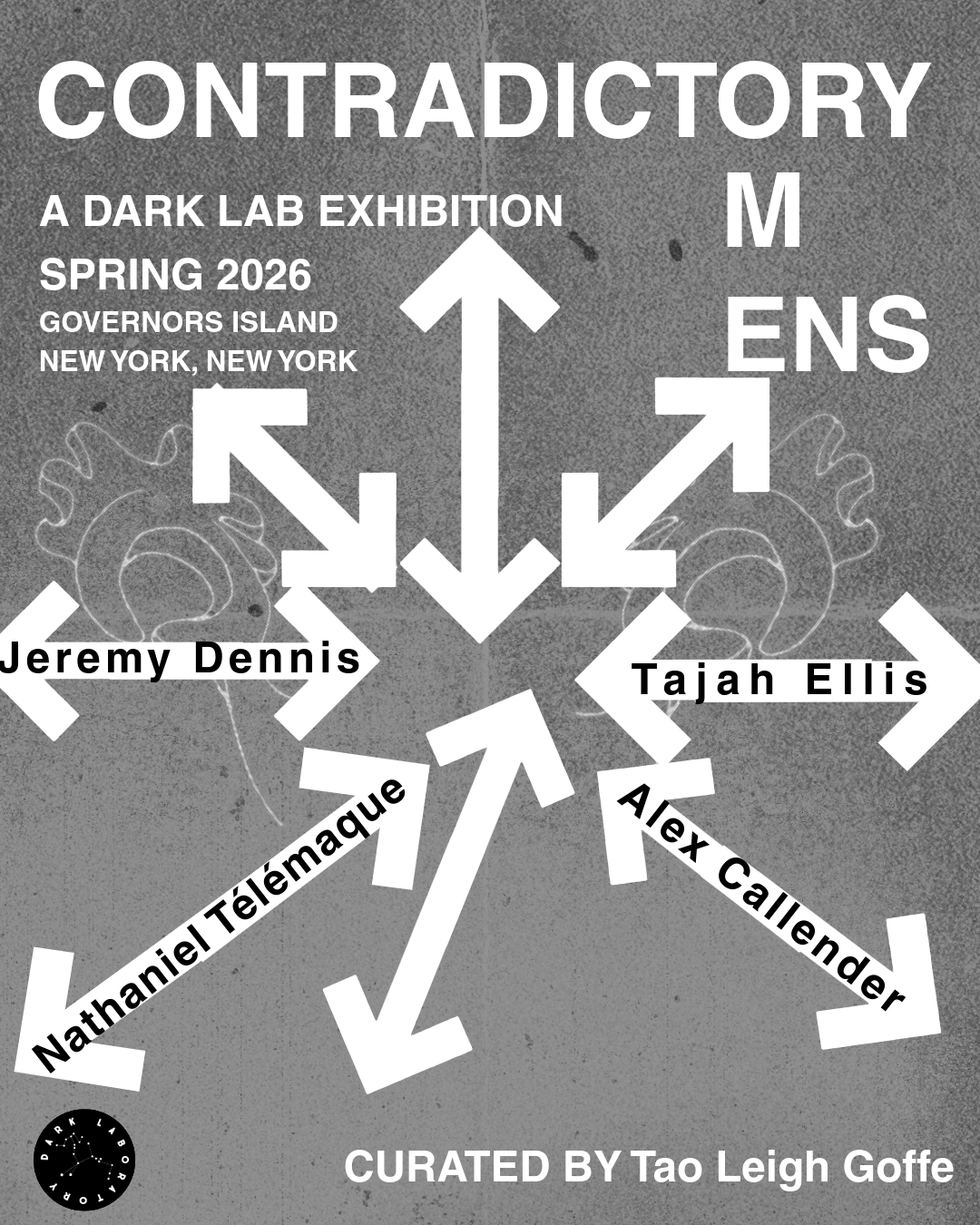
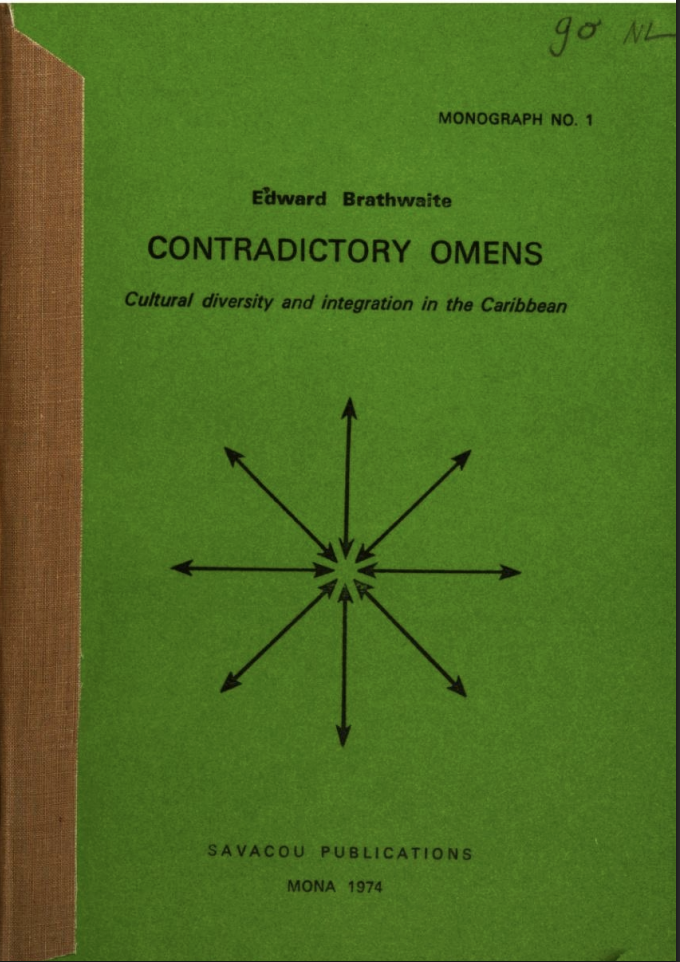
Contradictory omens
a group exhibition
curated by Tao Leigh Goffe
artists using the saturation of light and dark formally as a sovereign aesthetic in response to the dominant narratives of conquest across the Americas
House SavacouGovernors Island
New York City
Dark Lab Gallery
May 16-Sept. 20, 2026
By appointment
About the Exhibition
“…the idea is to try to see the fragments/whole”
(1974)
“…our problem is how to study the fragments/whole”
(1975)
-Kamau Brathwaite
Dark Lab presents Contradictory Omens, a group exhibition that “plays in the dark,” gesturing to Toni Morrison, by featuring artists who saturate their works with light and dark tones to narrate imaginaries of the epics of the Americas. Crafting a visual grammar for the haunted house that is the Western hemisphere, four artists —Alex Callender, Jeremy Dennis, Nathaniel Télémaque, and Tajah Ellis — occupy the perverse position of the underside of colonial modernity. Recasting hemispheric histories of land enclosure differently, they conjure sovereign otherworldly visions beyond the Western narrative of conquest by confronting the colonial and tourist’s gazes. Playing with brightness and opacity, the paintings, photographs, and tapestries alternatively entangle threads of Black and / or Native survival. The works defy and subvert the dispossession of Native sovereignty and African enslavement as the final chapter of the American history textbook. While monocrop agriculture depleted the soil for centuries from the plantations of New York to Barbados to Brazil, each artist turns to the abundance of the natural environment to critique the project of colonization to exhaust the land and its people.
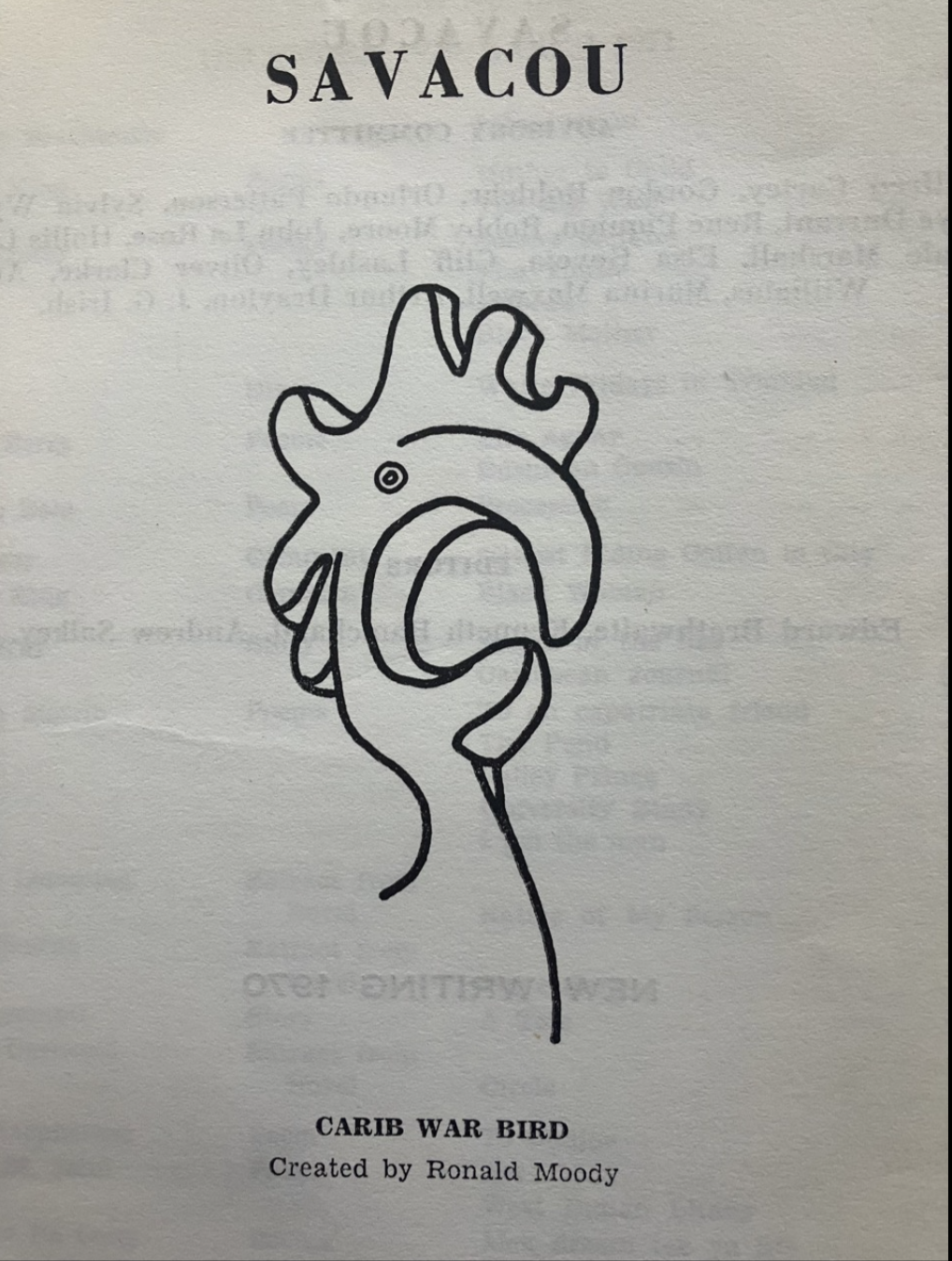
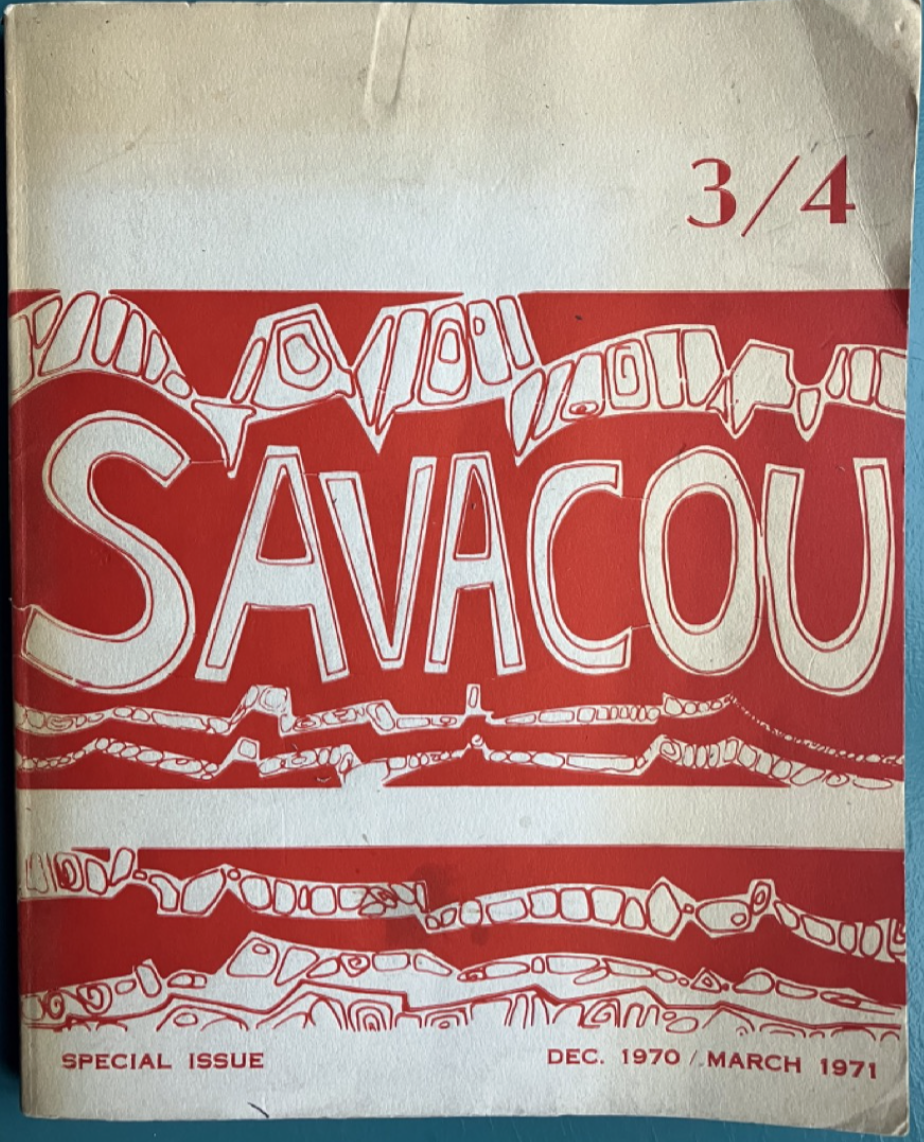
The title of the exhibition draws from the Bajan poet Kamau Brathwaite. Together the artworks are what he called for, a study in how “to see the fragments/whole,” by responding to the poetics of survival after the apocalypse of the plantation economy. Contradictory Omens, presents the contemporary vitality, humor, and the paradoxes of modernity. In doing so, the exhibition portends, answering the desire for the prophetic in these uncertain and politically urgent times, as the United States celebrates 250 years since its Revolutionary War. What is the Bald Eagle a harbinger of? What of Savacou the bird-god of Kalinago cosmology that Brathwaite named his journal for in 1970s Jamaica? Drawing from the experience of the Americas from Shinnecock Nation to Dominica (Waitikubuli) to Belize to the United States, the exhibition inaugurates the art gallery at House Savacou, which opens in May 2026 at Governors Island, Nolan Park.
Artists: Alex Callender, Jeremy Dennis, Nathaniel Télémaque, Tajah Ellis
Curator: Tao Leigh Goffe
ALex Callender
(b. 1980, New York City) uses methods of drawing, painting, and installation to trace and remap historical materials as a means to explore with both criticality and care, how we might disentangle the interwoven relations of race, gender, and capitalism. Callender has had solo exhibitions and projects at ArtYard (NJ), the Center for the Arts Northeastern University, UMass Contemporary Museum of Art, NYU Gallatin Galleries, island gallery (NY), and Michigan State University’s LookOut Gallery. Callender has received artist grants from the Pollock-Krasner Foundation and the Massachusetts Cultural Council and has held artist residencies with MacDowell Colony, The Schomburg Center for Research in Black Culture, Lower Manhattan Cultural Council, The Drawing Center’s Open Session program, Art in Embassies Program, The Vermont Studio Center, the Santa Fe Art Institute, Alice Yard in Trinidad, and DRAWinternational and The BAU Institute in France. Callender holds an MFA from Massachusetts College of Art. Callender lives and works in Massachusetts, and is currently an Associate Professor of Art at Smith College.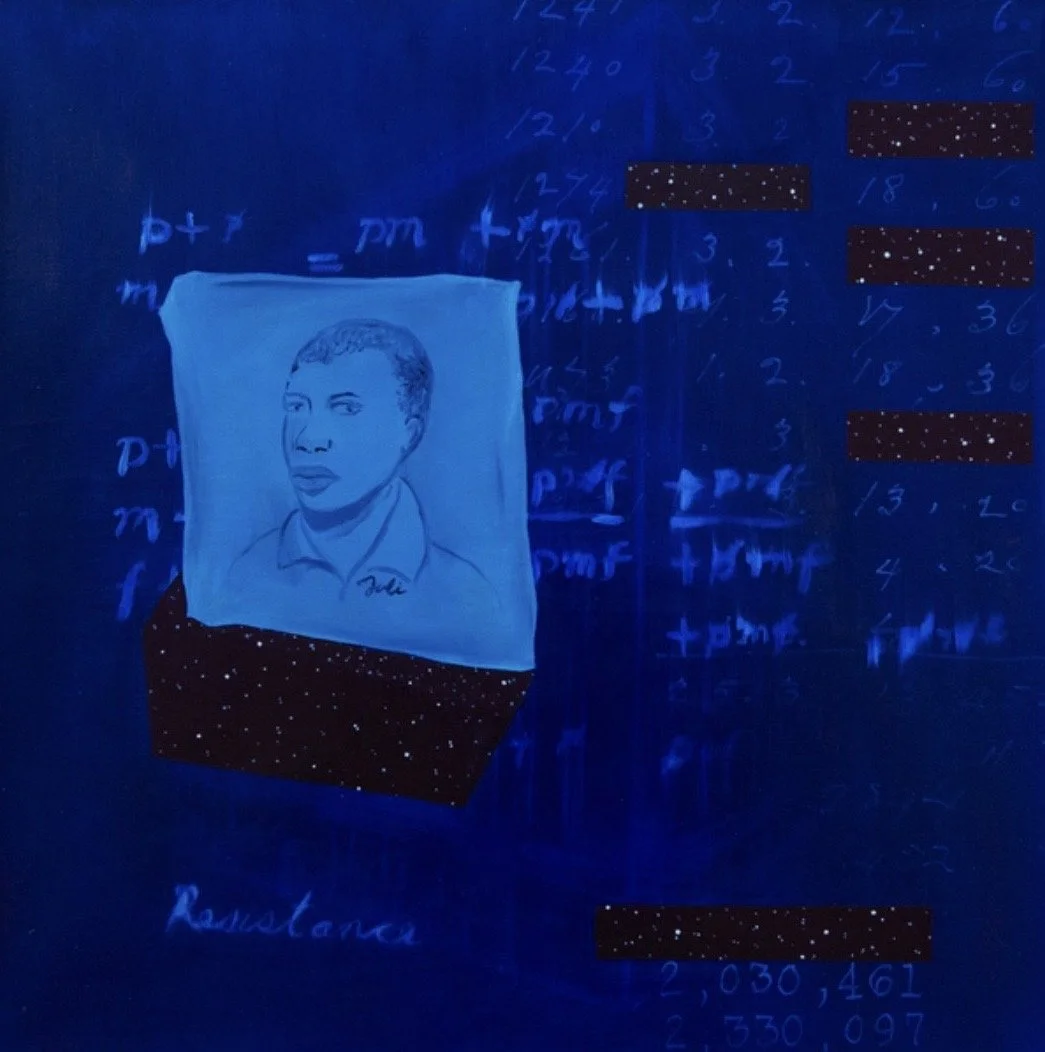
dear Fuli, writes their name out of the ledger, 2023, oil on canvas, 18 x 18 in.
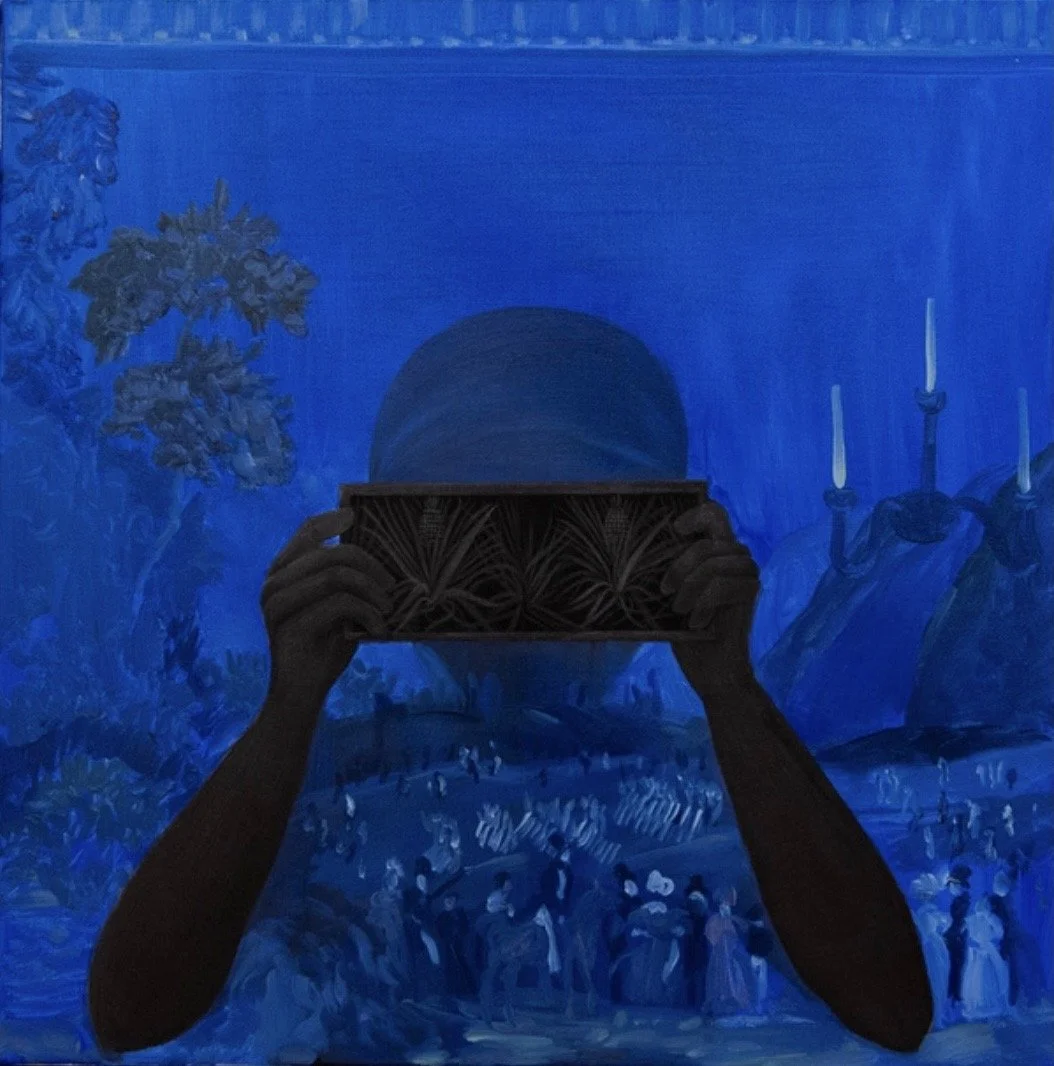
at this time of night there is no one place or the other and I see you clearly, 2024, oil on canvas, 18 x 18 in.
Jeremy Dennis
(b.1990, Southampton, New York) is a contemporary fine art photographer, an enrolled Tribal Member of the Shinnecock Indian Nation in Southampton, NY, and is the lead artist and founder of the non-profit Ma’s House & BIPOC Art Studio, Inc. located on the Shinnecock Reservation. In his work, he explores Indigenous identity, culture, and assimilation. Dennis holds a BA in Studio Art from Stony Brook University, NY and an MFA from Pennsylvania State University, State College, PA. Jeremy is a recipient of the Dreamstarter Gold grant and Art Matters Foundation Fellowship. He lives and works in Southampton, New York, on the Shinnecock Indian Reservation.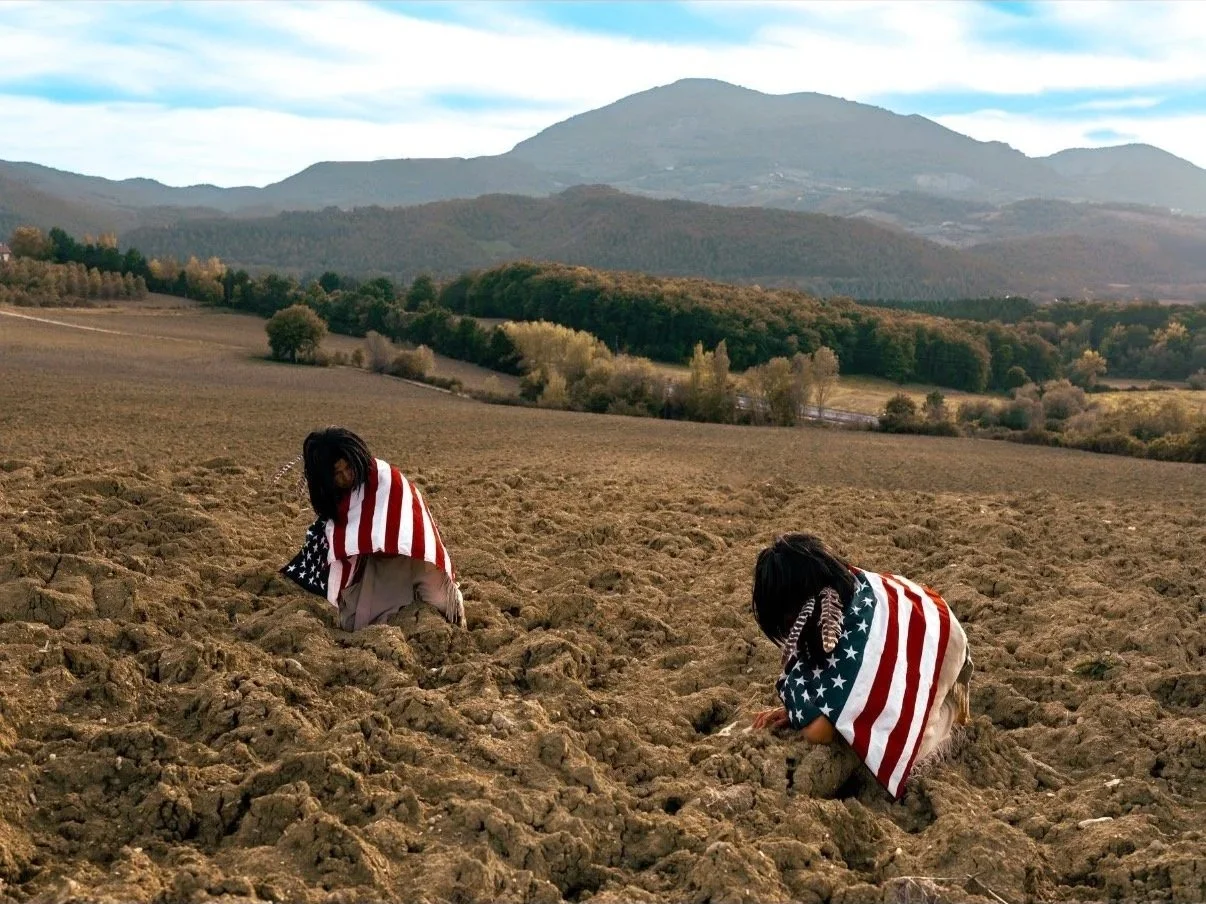
Cloak of Divisibility, 2025, Archival Inkjet Print, 12 x 18 in.
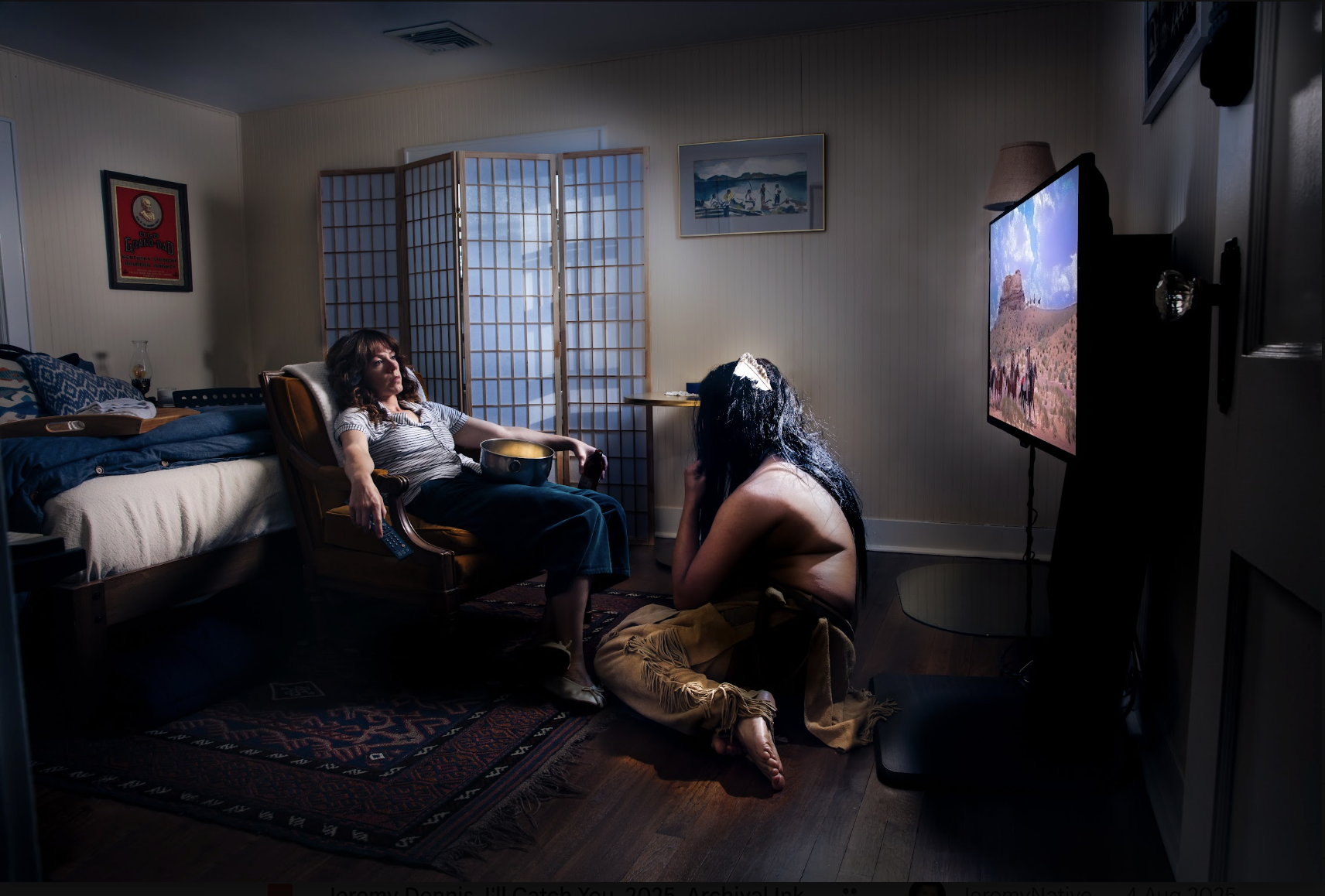
Haunted House Trope, 2019, Archival Inkjet Print, 12 x 18 in.
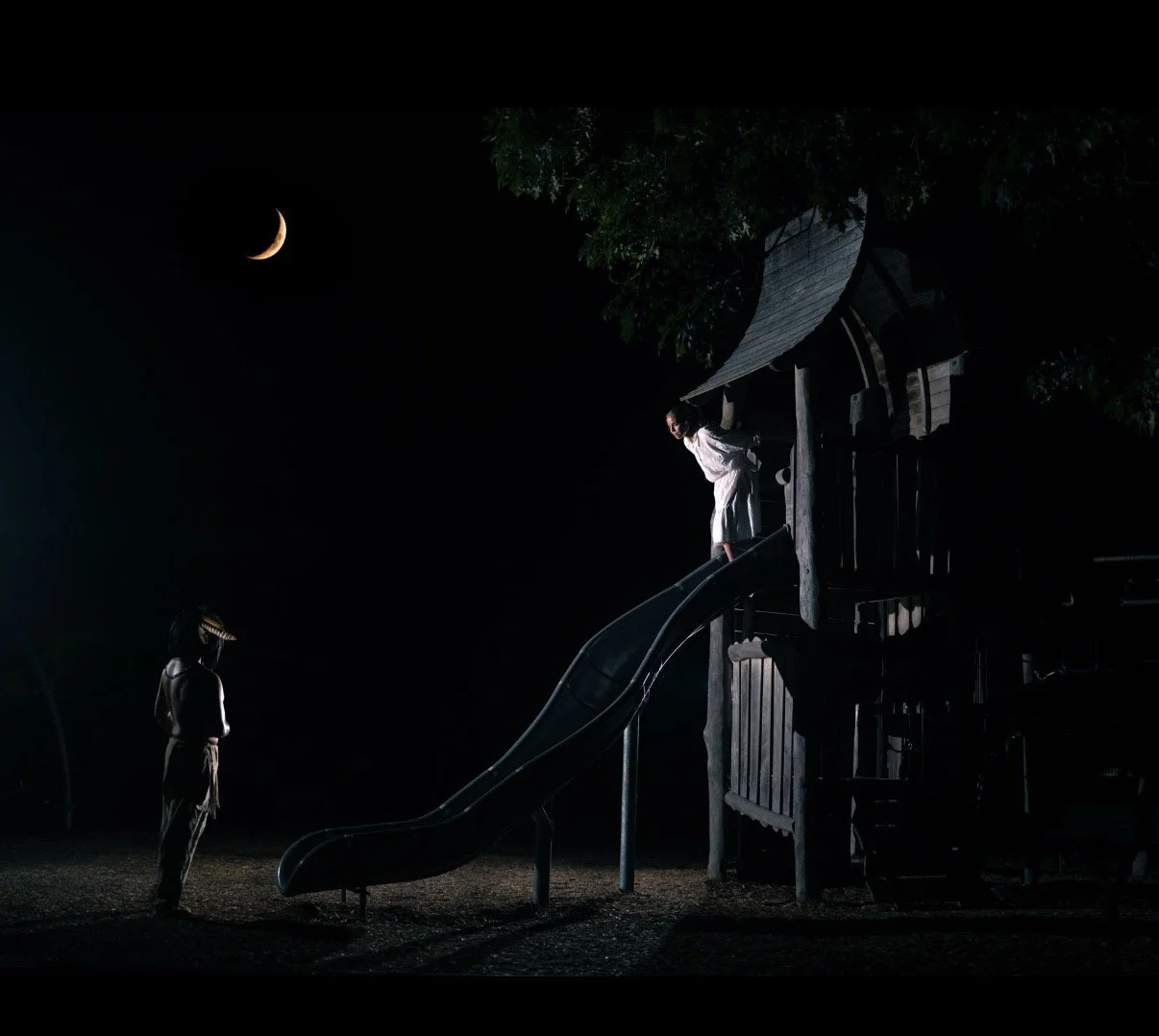
I'll Catch You 2, 2025, Archival Inkjet Print, 12 x 18 in.
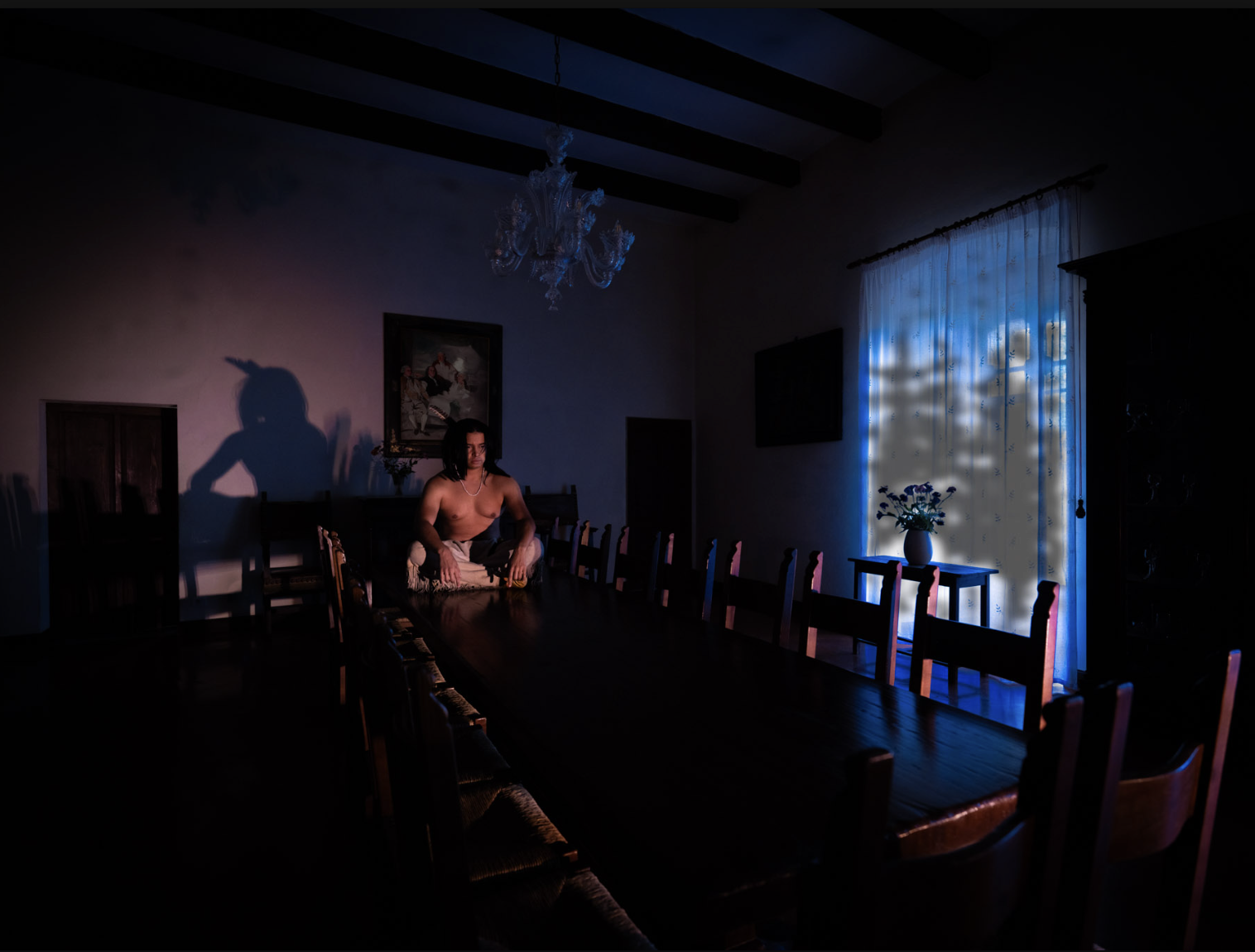
Treaty of Paris, 2025, Archival Inkjet Print, 12 x 18 in.
Nathaniel TÉlÉmaque AKA St. Peso
(b. 1991, North West London, United Kingdom) is a visual artist who photographs, films, records and writes about ‘everyday things’ in urban and natural settings. Bearing witness to mad cities, poetic Caribbean landscapes and maverick livelihoods inspires his audio-visual practices. His lenses focus on the experiences of young Black adults, creative peers and the ordinary moments that make up our day to day lives. As a member of the Pesolife Art Collective, he also produces and curates various projects with Pesolife collaborators Secaina Hudson & Kalina Blaize. The Pesolife Art Collective has been commissioned by various groups and organisations, such as The Victoria and Albert Musuem, The Southbank Centre, The Institute of Contemporary Arts (ICA), Ableton, Metroland Cultures, Birmingham City University, UCL, Brent 2020 Cultural Borough Awards and Nike. Through a combination of St.Peso’s visual arts practices in photography and self-publishing the Pesolife Art Collective has also published a series of photobooks and zines, which have led to the organisation of exhibitions and installations. Nathaniel holds a Geography (practice-related) PhD from University College London (2023), and currently works as an Assistant Professor in Geography and Social Justice at King’s College London University. 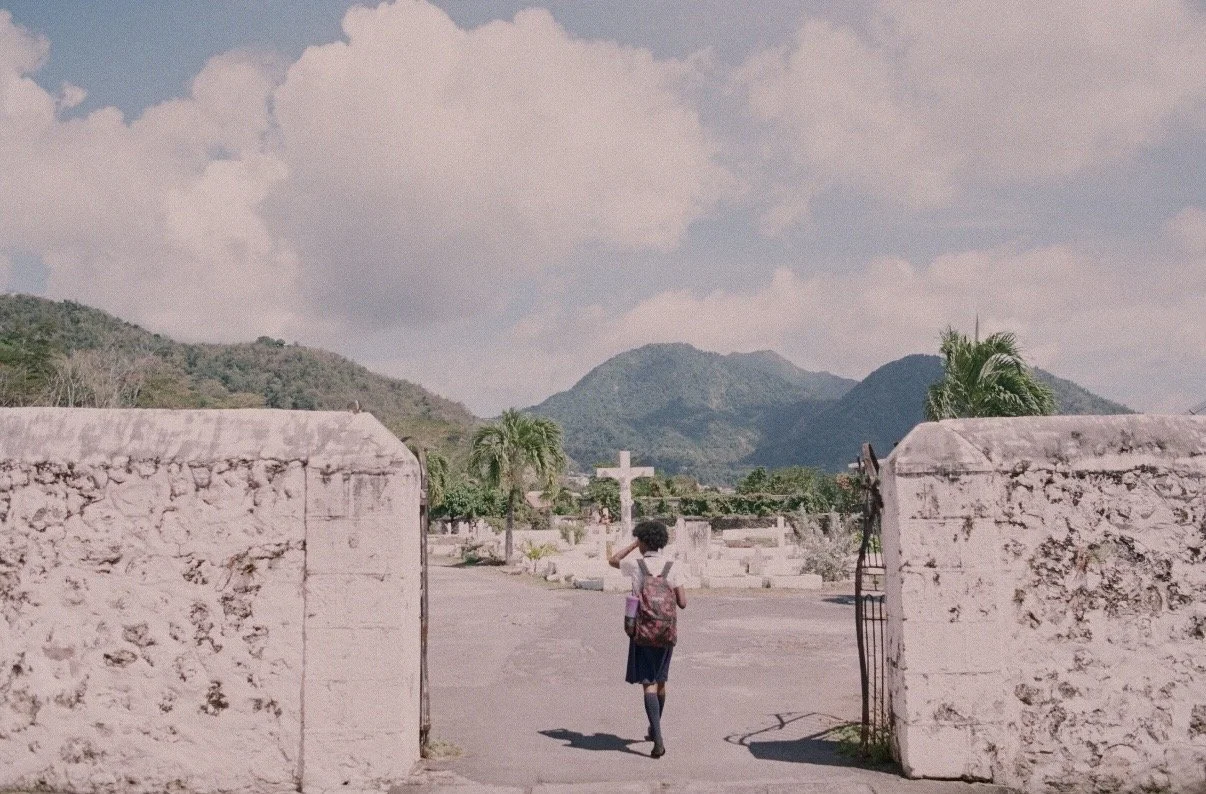
Claudia's School Run, 2025, 35mm, 12 x 18 in.
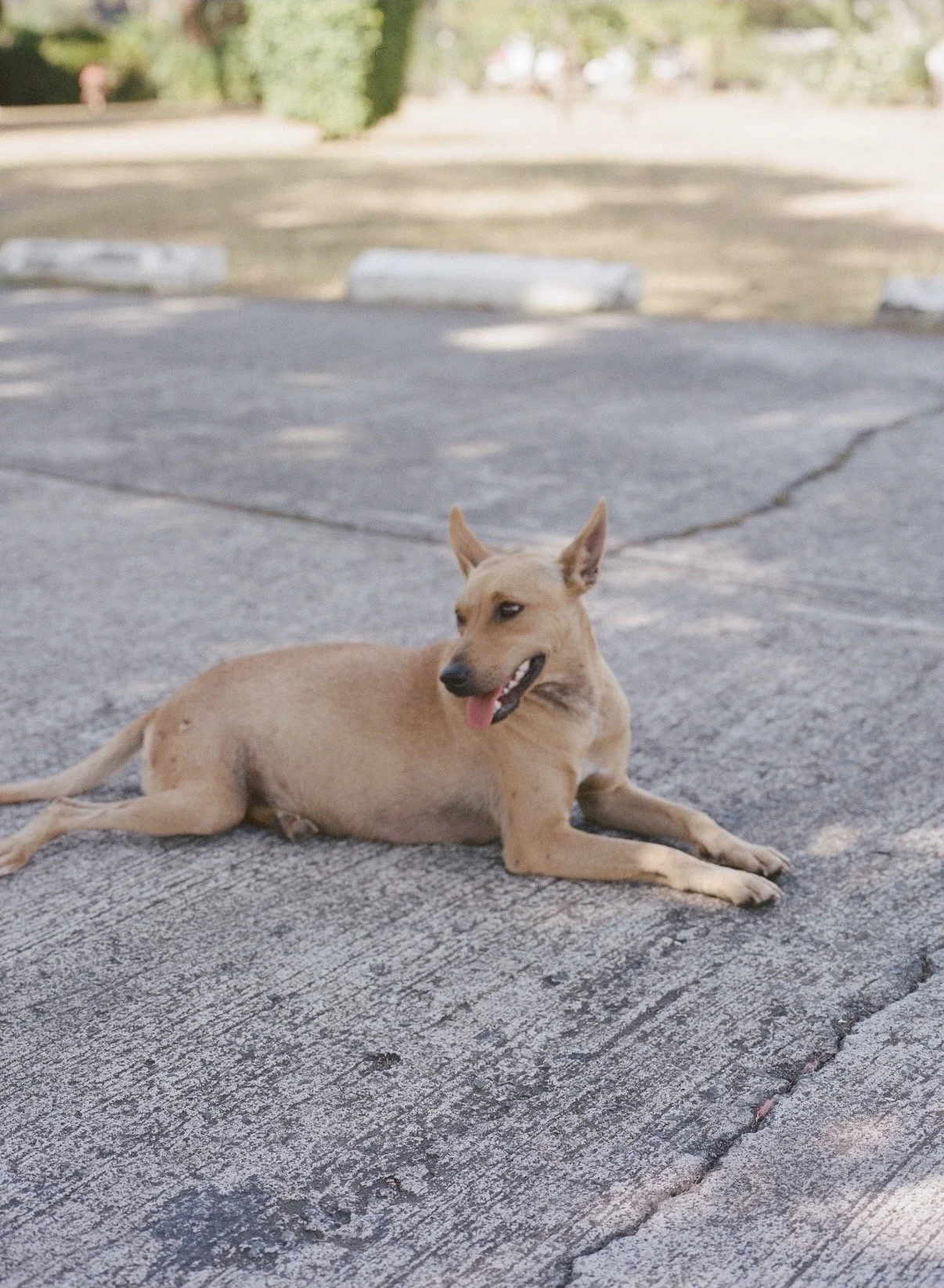
Botanical Garden's Keeper, 2025, 35mm, 12 x 18 in.
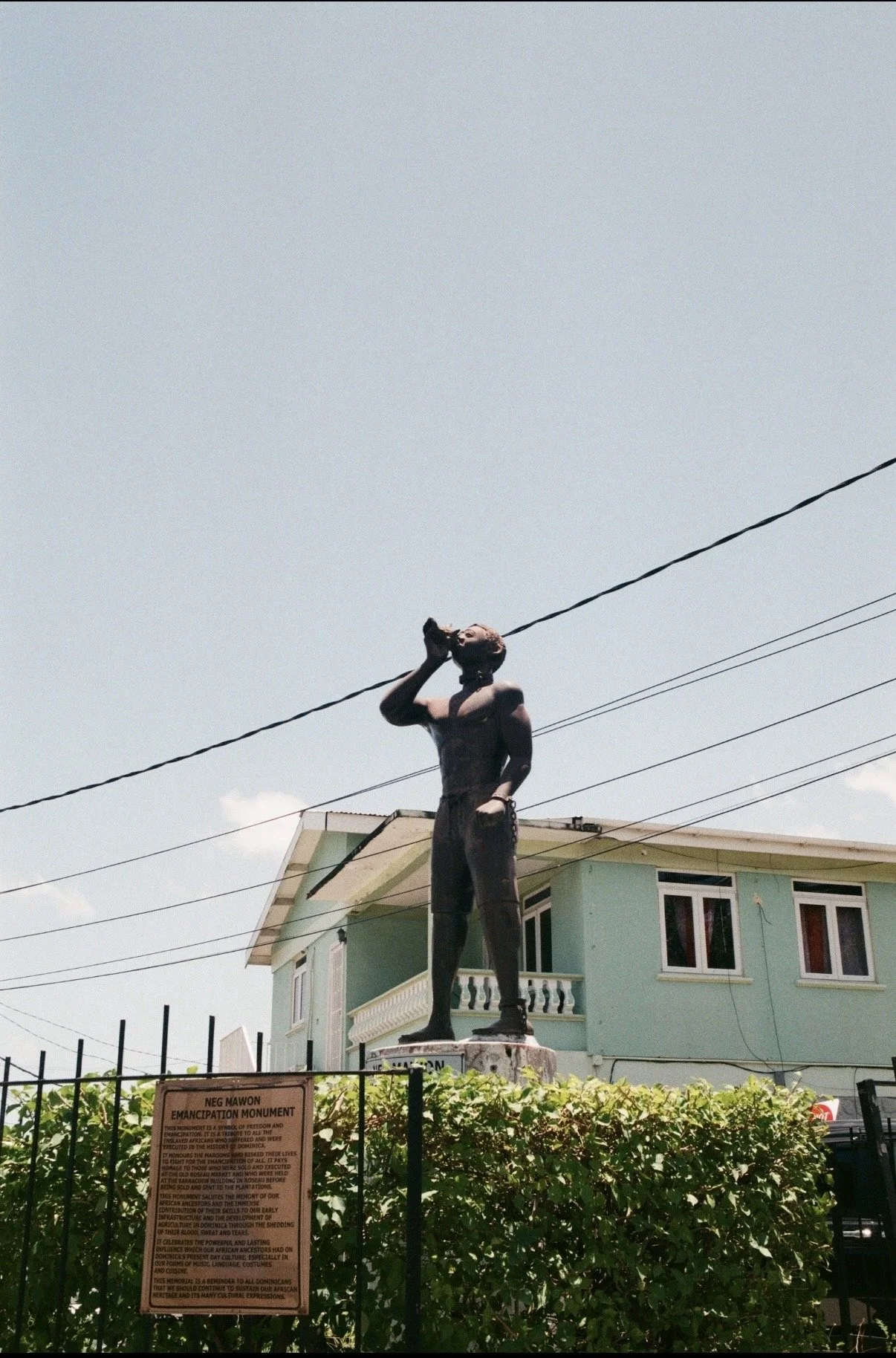
Neg Mawons, 2025, 35mm, 12 x 18 in.
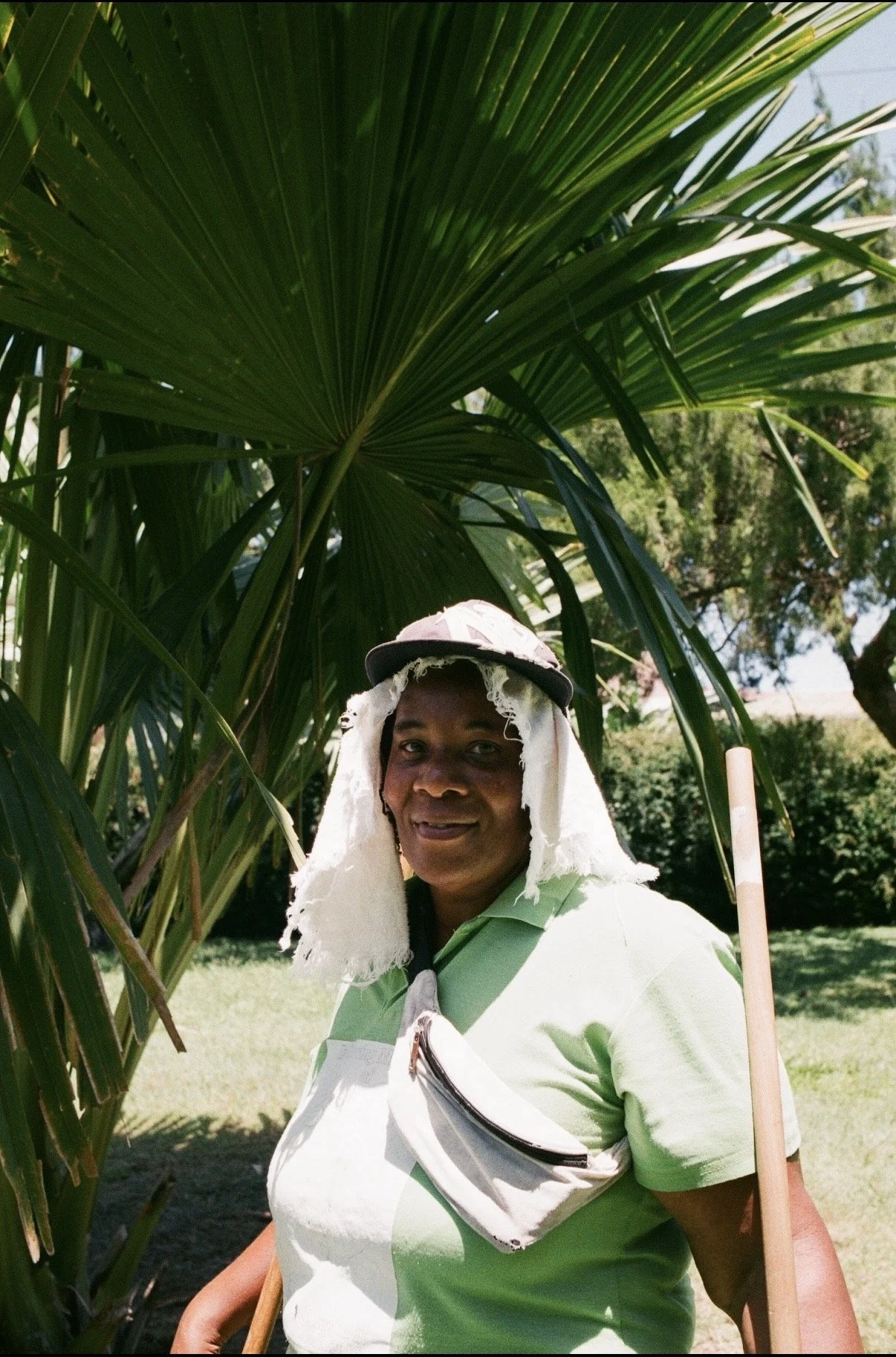
Chance encounters, Lorna in the Botanical Gardens, 2025, 35mm, 12 x 18 in.
Tajah ellis
(b. 1997, Brooklyn, New York) is an artist and bio-designer whose artisanship explores the regenerative mechanisms of intuitive chemistry, biological emergence and organic mapping. Her work with bio-materials and ecological excavation for dyes and pigments transforms plant matter into a vibrant range of colors, textures and patterns, evoking the signature of her re/de-construction practice, OUTOFSEAM. As an attendant of Waag Institute’s Fabricademy, Genspace’s Artist in Residence, and NEW INC’s Creative Science Cohort, Tajah’s practice has deepened it’s dedication to Afro-Indigenous continuity and alternative calculating systems through her research with algae, logwood and crystals. Rooted in chemical transfiguration by drawing from rituals of antiquity into extended future formations, a crescendo has emerged with ‘noon’: Ellis’ latest project extending garment constructions and fiber installations into a research-based, community-activated, dream-driven journal. She holds a BA from Brooklyn College, City University of New York. 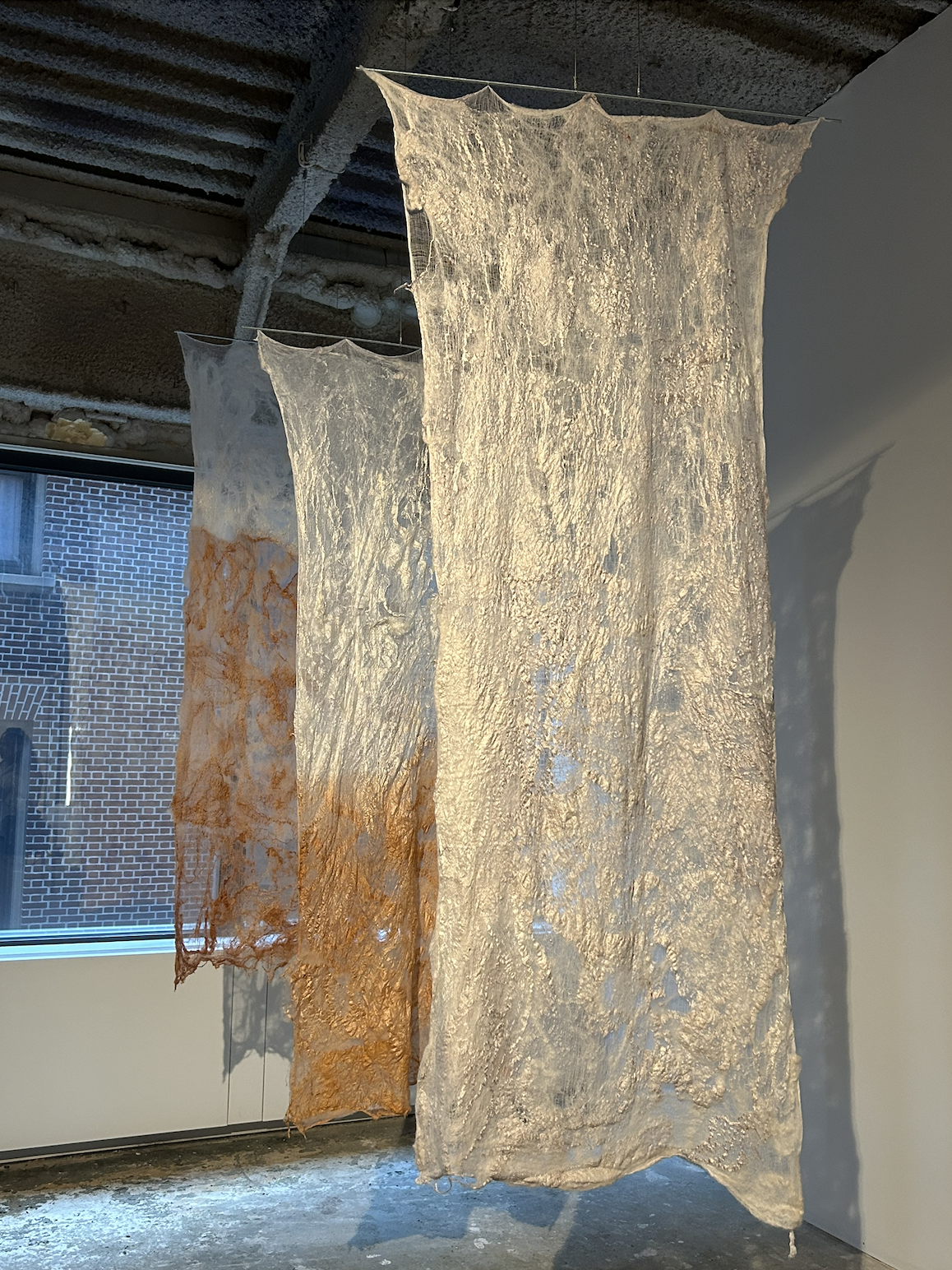
KNOT(X), 2024, Natural Fibers, Oil, and Ash Transformed Over Time by Chemical Interactions Activated by the Sun.