Stolen Life. Stolen Land.
2020 waS A moment of Global Reckoning. AT Dark Lab, we begin with the crossroads of the dispossession of Native sovereignty and African enslavement across the americas as a nexus of possibility.
We fund artists and projects to make possibility possible.
Philosophy
Dream.
Dark Laboratory is an engine for collaboration, design, and the study of race and ecology through creative technology. It is a collective situated at the intersection of scholarship, artistic praxis to examine non-linear storytelling by centering local and global non-profit community institutions as educators.
Design.
For Dark Laboratory the question of rural life involves a deep meditation on the land as a storyteller. With an eye toward personal geographies and the layered, sedimented presences of race in the United States, we consider Black and Indigenous grounds of burial and the haunting of empire in the landscape.
Cultivate.
As a laboratory devoted to humanistic inquiry, we examine entangled debates regarding stolen lands and stolen life at the crossroads of the University in relation to surrounding ecologies and communities. Dark Lab centers the relationality of town and gown to reframe the production of knowledge. How might embodied forms of storytelling such as weaving, cooking, ceremonial dance, and even singing lullabies be forms of knowledge?
coalition.
We consider the centuries-long deep and clandestine itineraries of fugitivity and in coalition across the Americas at the edges of the plantation. How, we ask, does nature continue to function as refuge for these coalitions? Of deep interest to Dark Laboratory is the Underground Railroad in Upstate New York as an ongoing site of and monument to Black fugitivity and resource.
Research.
We are hiring members from underserved and marginalized communities to be trained in research methods. Dark Laboratory provides consulting services and data-driven dossiers on the ethics of cultural representation in Hollywood cinema, corporate mascots, and cultural audits of institutional histories.
Learn.
Our philosophy is to learn from non-Western traditions about how to tell a good story. Good has meaning in the sense of the “common good,” ethical grounds, and the value of being an engaging storyteller using multimedia. We begin our inquiry in Upstate New York and Haudenosaunee homelands to ask difficult questions about the layers of Native dispossession and African enslavement foundational to the Western hemisphere.

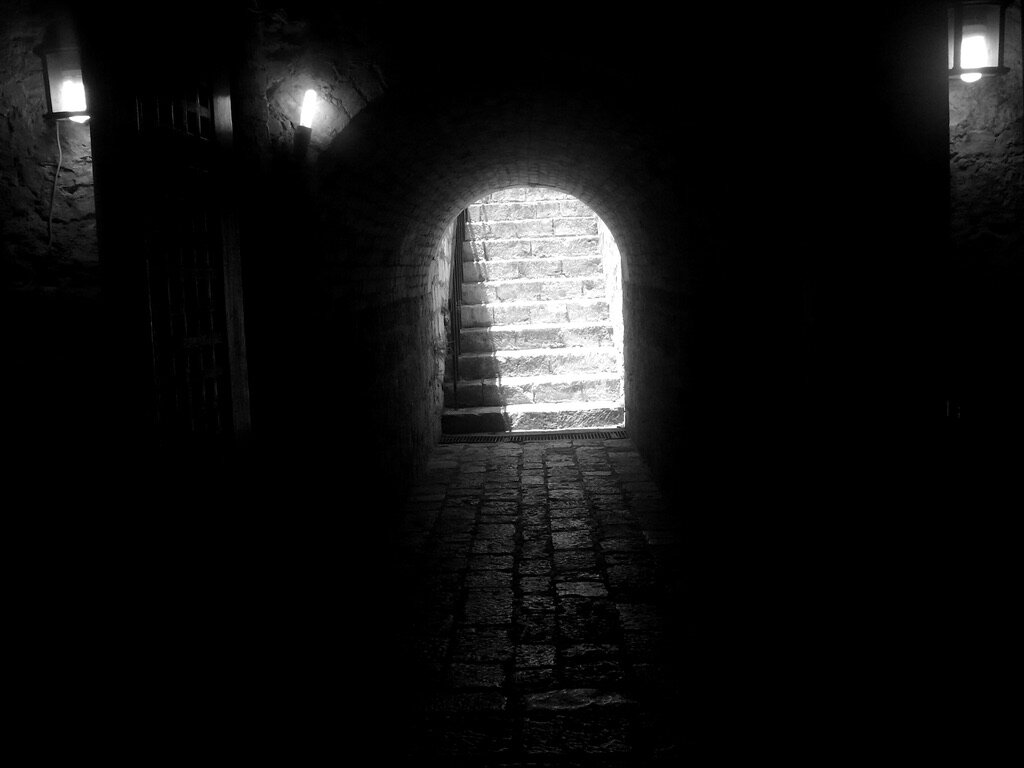
Trois Islets, Martinique. Photo Credit: Tao Leigh Goffe.
Dark Laboratory
Dark Laboratory (also known as Dark Lab) is an interdisciplinary arts and climate research organization founded in 2020 by writer, filmmaker, and artist Tao Leigh Goffe. Based on Governors Island in New York City, the organization develops projects at the intersection of contemporary art, environmental humanities, technology, and Black, Indigenous, and diasporic studies. Its work combines artistic practice, public scholarship, community engagement, and research to examine the historical relationships between colonialism, race, ecology, and climate change.
History
Dark Laboratory was established during the COVID-19 pandemic as a distributed research collective bringing together artists, scholars, scientists, filmmakers, and community organizers. Initially operating through virtual residencies and public programming, the organization expanded its activities through partnerships with cultural institutions, universities, and environmental organizations. In 2026, Dark Laboratory established House Savacou, its headquarters and residency space on Governors Island, which serves as a site for artist residencies, workshops, exhibitions, and public events, while maintaining lab space at Hunter College, CUNY on Manhattan’s Upper East Side.
Research and Practice
Dark Laboratory describes itself as working "at the crossroads of stolen land and stolen life," exploring how histories of Indigenous dispossession, slavery, migration, and extraction continue to shape contemporary environmental conditions. Its projects integrate film, installation, archival research, sound, food studies, immersive media, and public humanities to investigate island ecologies, coastal resilience, and climate justice. The organization emphasizes collaboration between academic researchers and local communities, while centering Black, Indigenous, and Asian diasporic knowledge systems.
Areas of research include environmental storytelling, Afro-Indigenous ecologies, food sovereignty, oceanic histories, digital media, and emerging technologies. Dark Laboratory has also developed initiatives in culinary research through Kitchen Marronage, a public humanities platform exploring food, migration, and community care.
Programmes
Dark Laboratory organizes artist residencies, exhibitions, podcasts, public lectures, workshops, reading groups, and youth education programmes. Its activities have included environmental storytelling workshops, climate-focused public events, artist commissions, and collaborations with organizations including the Boys Club of New York, cultural institutions, and universities. The organization also maintains the Afro-Asia Reading Room, a curated reference space devoted to decolonial thought, Black studies, Asian diasporic studies, and environmental humanities.
Dark Laboratory has participated in the New Museum's NEW INC incubator for art and technology and has presented work through the DEMO festival, including projects examining storytelling, climate, and culinary knowledge as forms of technological research and development.
Publications
The organization's research informed Goffe's book Dark Laboratory: On Columbus, the Caribbean, and the Origins of the Climate Crisis (2025), which examines the Caribbean as a site of colonial experimentation and environmental transformation. The book combines memoir, environmental history, and cultural criticism to explore the relationship between colonialism and the climate crisis.
Governance
Dark Laboratory is led by its founder and executive director, Tao Leigh Goffe, and is supported by an advisory board of artists, scholars, scientists, and cultural practitioners. The organization operates through a network of resident artists, researchers, and collaborators working across the humanities, visual arts, environmental science, and public engagement.